
Flour
Before you start baking it helps to know the basics about flour and how to choose the right type for your recipe.
Types of flour
We categorise the flours used for baking by how much protein they contain, which directly affects the gluten formation in whatever we’re making. Gluten gives elasticity to doughs and batters. Pastry, with its light flaky texture, has least gluten, while bread with its stronger chewy texture needs a high gluten content for elasticity and to help it rise.
In Italy and other parts of Europe flours are categorised on how finely the flour has been ground. Coarsely-ground type “2” flour is at one end of the spectrum with powder-fine “00” flour (perfect for pasta) at the other. This is not information that will help when baking a cake!
When baking you need to focus on gluten. The following guide will help you select the right flour for your recipe.
Cake flour has the least amount of protein (6-8%) and will create the least amount of gluten, which is why it’s ideal for pastries and light cakes.
If you want to make a lighter cake or pastry and all you have is plain flour, you can approximate cake and pastry flour by measuring out a cup of flour (120gm) less 2 tablespoons, which you will replace with 2 tablespoons of corn starch.
Plain flour the most commonly used in the home kitchen, is best for general baking with a median protein content of 10-13%.
Self-raising flour is plain flour that has been combined with salt and a chemical leavener, usually baking powder. It’s a convenience product offered by the flour manufacturer. But chemicals lose their leavening ability over time, and recipes call for different ratios of flour to leavener, so self-rising flour is not always ideal. An easy solution is to make your own when the recipe requires it.
Make 1 cup self raising flour by combining:
120 gm plain flour, with
½ teaspoon salt, and
1½ teaspoons baking powder.
Bread flour has a high protein content (12-15%) and is best for yeast breads.
If you can’t find bread flour in the pantry you can increase your flour’s protein content (and it’s gluten potential) by adding a few tablespoons of vital wheat gluten.
Whole wheat flour has the highest ratio of protein (13-14%), but the bran and germ that have been milled into it actually cut through the gluten bonds and inhibit rise. Because of this whole wheat flour is often combined with other flours.
Apologies for not including some information about gluten free and non-wheat flours. I don’t use them much so don’t have any tips to share.
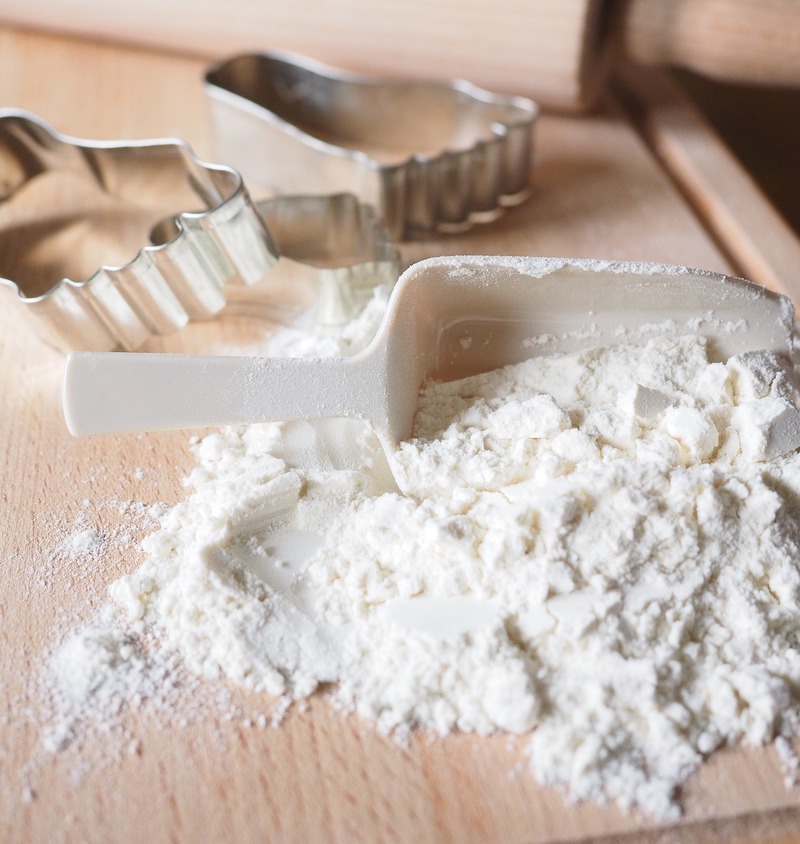
Now you need to measure it
Measuring flour is highly inaccurate unless you’re measuring by weight. If you don’t have a digital scale (you should get one) or have a look at these tips to ensure that you get the best results from your recipe.