
Fried Chicken Dinner
I have written an essay below on how to make a fried chicken dinner… Maybe a bit wordy, but it’s a brain dump of information you might find useful.
Servings
Dinner for 6
Ready In:
Time greedy!
Calories:
Excessive
Good For:
Eating….
About this Recipe
By: Ben and Sharyn
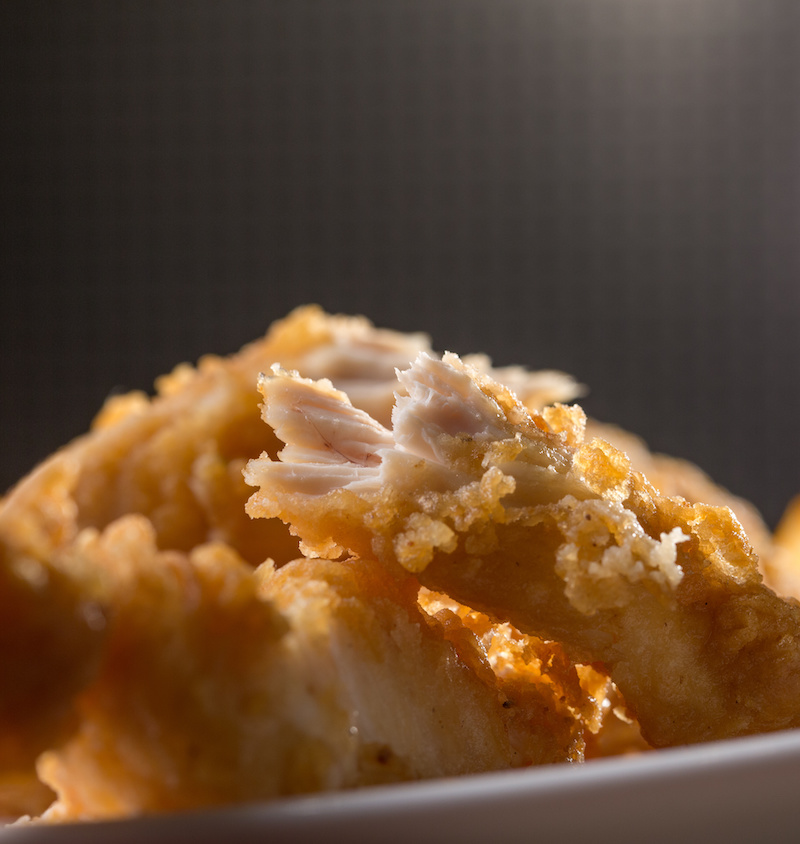
Ben wanted to try his hand at a Southern Fried Chicken dinner ala KFC. So we found a suitable recipe and cooked up a storm – kitchen covered in flour! It was a hit, well received by everyone, but…. fuss factor too high. The following is a combination of the ingredients/tips that I would take from the more traditional recipe and my own stand-by and well-loved fried chicken and mashed potatoes extravaganza.
Ingredients
Buttermilk marinade
500ml buttermilk (enough to cover the chicken)
all the same herbs and spices as you will use in your breading.
Chicken breading
- 2/3 tsp salt and
- ¾ tsp MSG – if you can get it!
- If you can’t get the MSG replace both the salt and MSG with a tablespoon of chicken powder (available at the asian stores – this is not chicken salt), or if chicken powder unavailable then use chicken salt.
- ½ tsp thyme
- ½ tsp basil
- 1/3 tsp oregano
- 1 tsp celery salt
- 1 tsp black pepper
- 1 tsp dried mustard
- 4 tsps of paprika
- 2 tsps garlic salt
- 1 tsp ground ginger
- 3 tsps white pepper
- ½ cup of corn starch
combined the above with:
- 2 cups of self-raising flour in a wide casserole dish.
Buttermilk biscuits
3 cups self-raising flour.
2 tbsps. of sugar
4 tsps. baking powder
½ tsp baking soda
½ tsp kosher salt or 1/4 tsp table salt
(if butter already salted halve the salt)
Mix above together.
225 gm frozen butter
Mashed potatoes
1.5 kg (3.30 lb)Potatoes
You want Russets, Yukon Gold, Bintje, Coliban, Desiree, or Golden Delight potatoes. The starchier the better.
You DO NOT want low starch potatoes such as red, white, and blue varieties.
If you find green areas in your potato flesh, cut it out and throw the green parts away – its toxic and bitter. Never use a green potato.
Chicken Gravy
Stock
If you really want to do this…. here are the ingredients.
Bones from your chicken, wings, spine, and throw in any uncooked chicken bones you have on hand. Or you can buy chicken wings to make stock.
Fresh thyme, dry thyme or 2 bay leaves – if you are going to use dry thyme then you MUST convert down. 1 tablespoon of fresh thyme equals ¾ teaspoon of dry thyme.
1 carrot peeled and cut into quarters
1 celery stick cut into quarters
1 onion cut in quarters (skin on)
1 whole clove of garlic with top cut off about 1/3 rd of the way down (you want to keep the clove together but expose the garlic flesh). Toss both halves into the pot.
Gravy
45 gm (1/3 cup) plain flour
(or gravy flour if you prefer).
5 tblspn unsalted butter
Season to taste with salt and soy sauce.
Make your marinade and place chicken well covered in the fridge from 6 to 12 hours. You could give it a stir from time to time, but I’m too lazy to bother – I figure if the chicken is covered then job done.
Some recommend leaving the chicken in the marinade for up to 24 hours – I don’t. In my opinion the chicken loses it’s sweetness and the flavour becomes muddied by the sourness of the buttermilk if left too long. I generally make the marinade in the morning if I’m going to cook chicken for dinner. Similarly, if you were going to serve for lunch, start marinading the chicken before you go to bed.
If you haven’t any buttermilk, you can easily make it yourself by adding an acid, such as lemon juice or white distilled vinegar, to the milk. Ratio is 1 tablespoon of acid for every 1 cup of milk.
Although you get great flavour if you double up and put the seasonings in both the marinade and breading, I contend that the seasoning then becomes the star of the show and you lose the clear distinction of the sweet meat flavour and the crumb – your choice!
The magic ingredient in the KFC version that you probably don’t have in your kitchen is MSG. If you can get it, use it, you’ve been eating it anyway (there is no requirement in restaurants and cafe’s to declare the presence of MSG). Poor MSG has a totally undeserved reputation for being bad for you…. If the following excerpt from Food Standards Australia doesn’t convince you, go to their website.
‘MSG is one of the most extensively researched substances in the food supply and has been studied for more than 40 years.
Numerous international scientific assessments have been conducted, involving hundreds of studies. None of these have conclusively linked MSG to asthma or ‘Chinese Restaurant Syndrome’.
Food Standards Australia New Zealand (FSANZ) reviewed the safety of MSG in 2003 concluding ‘there is no convincing evidence that MSG is a significant factor in causing systemic reactions resulting in severe illness or mortality’. ‘
MSG can be found at the Asian Grocer under it’s new and less contentious name, ‘Umami Seasoning’.
The basis of the gravy is the roux. A roux is a mixture of flour and butter (or your preferred fat or oil). The measurement is roughly 1 to 1 by volume, ie. 1 tablespoon of flour for every tablespoon of butter. To calculate by weight, a tablespoon of butter weighs 20gm and a tablespoon of flour weighs approx 8 gm.
You melt butter over medium low heat and add flour, stirring in a figure eight with a wooden or silicone spoon.
- Stir for 3 to five minutes for a light roux, used for light gravy and béchamel sauce.
- Stir 6 to 7 minutes for a brown roux, perfect for dark meat gravy.
- A dark roux which takes 8 to 15 minutes is best for cajun and creole recipes.
Remember, the longer a roux cooks the less it thickens the sauce. Always let the roux cool slightly before adding another liquid, (stock or milk) then whisk and simmer until the gravy/sauce reaches your desired thickness.
Once cooked you can take your gravy off the heat and reheat over low heat prior to serving. You can also make your roux well in advance and store in the fridge until you are ready to add liquid to finish your sauce.
Sarnie’s Fried Chicken
Marinade chicken tenders in buttermilk, sans seasoning. Why tenders? No bone to contend with, no white meat/dark meat cook time to worry about, no skin – all pieces uniform in size and taste; the chicken tender strip is in fact more tender than slices of breast and doesn’t have the gristle fat of thigh pieces.
When ready, take chicken out of marinade, let drain but don’t wash, make flour breading with your staple herbs and spices from the spice draw, dump chicken in breading (it will stick to the buttermilk), pan fry for approx 5 minutes per batch, and voila! Everyone loves it, chicken is always tender and tasty.
Although you get great flavour if you double up and put the seasonings in both the marinade and breading, I contend that the seasoning then becomes the star of the show and you lose the clear distinction of the sweet meat flavour and the crumb – your choice!
The star of my cheat recipe is chicken salt. This stuff is great for giving flavour to any kind of breading or flour coating, it should be a staple in every pantry. Here is my magic cheat recipe… a generous amount of chicken salt, any ground herbs and spices that you like the flavours of (ground coriander adds sweet fragrance, a touch of ground cumin adds depth, paprika for colour and flavouring, onion powder enhances the tastes (don’t substitute with garlic powder – too pungent), and avoid the herby oreganos and basils – they drown the others). Clearly this is not Southern Fried Chicken, but it is bloody good!
Step by Step Instructions
Stock – Official Version
Deeply brown chicken wings and spine in a small amount of vegetable oil over high heat.
Add whole onion cut in half, 2 -3 carrots cut into chunks, 2 -3 celery sticks cut into chunks, a head of garlic cut in half through meaty centre, and a bunch of fresh thyme (or a bay leaf). Deglaze the pot with 8 cups of cold water.
Bring to the boil, immediately lower the heat until it reaches a bare simmer and keep there for about 4 hours.
Stock – My Version
Buy good quality, no salt or low salt chicken stock. I’d happily make stock for a soup but I think the fuss factor is too high for a gravy. Having said that, if your only choices are stock cubes, or an eau-de chicken pungent packaged stock – then make your own. The strident taste of the artificial stock overpowers every other flavour. And, if possible, always buy low salt or no salt stocks, you can always put salt in, you can’t take it out.
Buttermilk Biscuits
Grate 250 grams (2 sticks) of frozen butter, using a cheese grater.
Add the butter to the flour mixture. Make sure all butter pieces are coated.
Add 1 ¼ cups buttermilk to the mixture and stir to combine. Don’t whip just hydrate as much of the flour as possible.
Turn out onto a well floured surface and block into a rough rectangle (40 x 20 cm) and roll out using a generously floured rolling pin. Use a bench scraper to fold into thirds (like you fold a sheet of paper to fit into an envelope).
Roll out to 40 x 20 cm and fold into thirds again. Do about 5 times. Place dough on a baking sheet. Cover in plastic wrap and refrigerate for 30 minutes. Once chilled. Roll out into an approx. 20 x 20 cm square shape.
Using a sharp knife trim the edges. Cut into 9 biscuits. Do not wriggle the knife from side to side or saw through, you want clean cuts so you don’t squash down the layers. (This rule also applies for any layered biscuit, such as scones).
Place onto baking sheet and brush with melted butter. Bake at 200°C (400°F) for 20 to 25 minutes until golden brown. Cool on wire rack for 10 minutes before eating.
Gravy
Make a blond roux. In a smaller saucepan melt 5 tbsps. of butter until foaming and 1/3 cup self-raising flour, whisk for an additional minute before slowly streaming in your chicken stock; whisking constantly to prevent clumping and adding about 3 cups stock and a good glug of soy sauce (if needed*). Bring to a bare simmer for 3 to 4 minutes until it thickens to a gravy consistency. Taste for seasoning. Take off heat and put to the side.
*Note: If your butter is salted and/or your stock is pre-salted your gravy will be either well salted or over salted. Taste before you add the soy or additional seasoning.
Mashed Potatoes
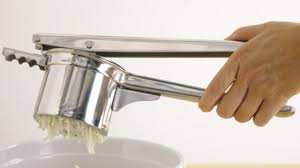
Are you a masher or a ricer? I’m a ricer (it’s a perforated cup that you push the potato through – see image above) . Ricing makes for consistently creamy mashed potatoes. The dreaded lumpy clump of starch which was the staple vegetable of my childhood is now a distant memory.
Cook the potatoes your way – boil, steam or dry roast, just make sure you stop cooking when the potatoes are soft (especially if boiling):
- Boiling – Place potatoes peeled and chopped into 3 cm (1 inch) cubes into a pot of cold water. Bring to a boil cook for 12 – 16 minutes until the potatoes are cooked through. Drain the potatoes, but don’t yet put them back into the pot. Place the butter in the hot (empty) pot. If using a potato ricer squeeze the potatoes back into the hot pot, or if mashing just toss them on top of the butter and go to town. Stir the butter through before adding the warmed milk.
- Steaming – If you have a steamer simply cut the washed but unpeeled potatoes into quarters (or manageable chunks) and steam for approx 20 minutes or until soft. Leaving the skins on is great nutritionally, but you will have to peel them off prior to mashing. I squeeze skins and all through the potatoes ricer and then pluck the skin out of the cup before ricing my next batch.
- You can also dry roast the potatoes in the oven and when soft, cut in half and scoop out the cooked potato.
You want to stir the butter through the potatoes before adding the liquid, this coats the starch and makes the mash fluffier and less gluey.
Warm 2 cups of warm milk (I throw a big glug of cream into the milk to make up the 2 cups). Now don’t go dumping the entire load of milk into the potatoes, add then stir, and add again. The amount of liquid will depend upon how starchy and fluffy your potatoes are. Just dumping all of the liquid in could result in a sloppy mess. Season to taste with salt and white pepper.
Great mash is a matter of taste. My friend Chris contends that it requires a lot of butter, not just a lot, but a lot a lot. I think that a great mash is rich in flavour but light in texture. You need to experiment with your butter to milk ratio. If it’s not quite right I find a bit of pouring cream at the end can help, but whatever you do once you get the right consistency, stop adding milk – you don’t want to drown the potatoes or turn it into glug.
Fry Chicken
Cover chicken in flour and rest for 10 minutes.
Fry in a heavy stock pot. Fry for approx. 10 minutes (flip at about 6 minutes) until deeply golden brown and crisp.
Place on wire rack in a low oven.
You can check if chicken is done by using a cooking thermometer, dark meat should register at 175°C (350°F) and white meat at 165°C (330°F).
Serve!