
Work with me here. Just a bit of back-story (because I really do love the back-story) and I will get to the point – it’s cheese, it’s worth waiting for!
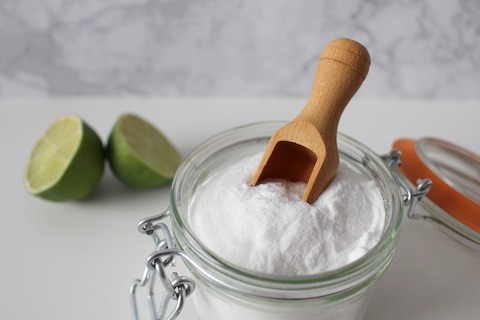
Sodium Citrate (E331) is one of those magic white powders, like bicarbonate soda, baking powder, and citric acid, that might lurk in the back of your pantry. Sodium Citrate is rarely required in your daily cooking but, when used, will deliver grand moments of alchemy. It is the salt of citric acid. Due to its salty and sour flavour, it is also known as sour salt – and confusingly so is citric acid – don’t get the two confused, they are not interchangeable.
So what is it used for? Mainly in manufacturing as a food additive for flavour, an antioxidant, or as a preservative. It gives its tart and salty flavours to sodas, such as club soda. It is also found in gelatin mix, ice-cream, jams, sweets, wine, milk powder, and so on – so its perfectly safe to consume. But more interestingly, and the reason for this seemingly pointless ramble, is it gives processed cheese its melt.
Have you ever tried to melt real cheddar cheese and found that it turns into an oily unappetising clump of protein floating in a pool of its own rendered fat? And yet the much maligned processed cheddar cheese seems to melt easily and evenly over a burger or in a toasted cheese sandwich.
Cheese purists turn their noses up at processed cheese, questioning whether in fact it is real cheese at all. In case you were wondering, it is! Processed cheese, aka American cheese, is made from real cheese with the addition of sodium citrate. This is sodium citrates special skill, it can melt any cheese without becoming greasy… and (pausing for effect) you can easily do this at home with a cheese of your choice, or a combo of cheeses. Think cheese sauce without milk, butter and flour – no diluting additives, no roux, no fuss – just pure cheese melted with a dash of sodium citrate dissolved in liquid. Mmmm queso dip, nachos, cheese sauce for cheesey vegetable and pasta bakes, simple mac and cheese.
Sodium citrate can perform this magic because it allows the proteins in cheese to become more soluble while lowering the pH of the sauce, which creates a smooth emulsion without curdling.
Call me weird but I loved the idea of creating a delicious cheese sauce in minutes with just 2 ingredients and a liquid. Only one small snag… sodium citrate is really hard to find (I repeat it is not the same as citric acid, which is easy to find, so don’t confuse the two). I couldn’t find sodium citrate at my local supermarket, health store, or asian store – usually a treasure trove of hard to find ingredients. You can order it online – chefs use this stuff – but I didn’t want to wait for delivery. This of course sent me diving head first down the rabbit hole, I found the recipe for making this at home, which is exactly what I did. So interesting, so easy, it was a mini chemistry lesson in the kitchen – complete with endothermic reaction. And making it is a lot cheaper than buying it online – approximately $3.00 for 120grams.
Oh, and just in case of confusion, its chemical name is trisodium citrate.
Here’s the recipe…
Sodium Citrate
A couple of things to remember:
Make sure your pot and spoon/spatula are spotlessly clean. Sodium citrate also makes an effective cleaner, so if you have staining or deposits in your pot it could discolour your final product.
Use a medium sized pot (at least 2 litres) the bicarbonate soda will effervesce quite a bit.
The measurements are precise. I used a digital scale to measure all of the ingredients, including the water.
The process takes about 2 hours, but you don’t have to stand over it the whole time.
| 125 gm (1/2 cup) | pure water | The water should be free of contaminants, such as minerals and chlorine. I used demineralised water – you will find it in the laundry section of the supermarket (it’s not intended for human consumption but given that it has no contaminants and was going to be evaporated off anyway I figure it’s ok). |
| 74 gm | citric acid | Readily available – usually found in the baking aisle of the grocery store. |
| 97 gm | bicarbonate soda | Ditto above. |
| Place citric acid in a saucepan with the pure water and stir until fully dissolved. No heat. |
| Once dissolved, gradually add bicarb soda stirring constantly until effervescence decreases (don’t dump it all in at once as it will bubble over). No heat. |
| The mixture will be cloudy and continue to bubble as it releases the carbon dioxide. You can leave it to do its work, just come back from time to time to give the bicarb soda that has settled on the bottom of the pan a bit of a stir. Toward the end of the process you will need to stir away the last of the residue and cloudiness. Mixture is fully dissolved when it can no longer produce CO2 bubbles. This could take up to an hour or more. |
| Now place saucepan on low heat, bringing to a low simmer. The process now speeds up. Stirring constantly a white powder will begin to form. When all liquid has been evaporated you will be left with a thick white paste. Smear paste evenly over the base of the pan and turn off heat. Leave the paste to finish drying uncovered in the hot pot. |
| Remove dry powder from pan and store in well sealed jar. You will need to break up clumps. Makes 120 grams of Sodium Citrate. If stored in a dry place out of direct light it should last a very long time. |
And here’s what got me started on this fools errand, the cheats recipe for Mexican Queso Dip.
Recent Comments